

The campechano taco stands as a monument to the art of meat blending in Mexican gastronomy. Unlike single-protein options, this specific variety relies on a harmonious marriage of textures and savory profiles. It is a staple of bustling street stalls from Mexico City to the coastal regions, offering a satisfying experience that satisfies the most demanding appetites. By combining different cuts and preparations, the campechano taco creates a layered taste profile that remains unrivaled in the world of casual handheld dining.
Table of Contents
Understanding the Essence of the Campechano Taco
What Defines the Campechano Style?
In the world of Mexican street food, the term “campechano” refers to a mix or a cocktail of different ingredients. When applied to a taco, it signifies the combination of at least two types of meat in a single tortilla. Traditionally, a campechano taco features a base of finely chopped beef asada paired with a spiced sausage. The goal is to create a contrast between the chewy, seared bits of steak and the crumbly, fat-rich spices of the sausage. This creates a balanced bite where no single flavor dominates the palate, but rather everything works together to satisfy the senses.
The Cultural Origins and Popularity
While the exact origin point is often debated among culinary historians, the campechano taco is deeply rooted in the “taquería” culture of Central Mexico. It represents the efficiency and creativity of street vendors who sought to offer customers something more complex than a standard beef taco. Over time, it has become a favorite for late-night diners who want a heavy, flavorful meal. According to the history of Mexican food culture at Britannica, tacos have evolved from simple corn-based meals into highly specialized regional icons, with the mixed-meat variety being a prime example of urban innovation.
Print
The Ultimate Campechano Taco
A masterclass in Mexican street food featuring a harmonious blend of finely chopped beef asada and savory spiced sausage for a multi-layered taste profile.
- Total Time: 35 minutes
- Yield: 4 servings 1x
Ingredients
- 1 lb Beef flank steak or sirloin, finely chopped
- 8 oz Beef chorizo or longaniza sausage
- 12 Small corn tortillas
- 1/2 White onion, finely diced
- 1/2 cup Fresh cilantro, chopped
- 2 Limes, cut into wedges
- 1 tbsp Vegetable oil
- 1 tsp Sea salt
- 1/2 tsp Black pepper
- 1/2 cup Salsa verde or roja
Instructions
- Step 1: Prep Meat – Finely chop the beef into small, uniform cubes and season with salt and pepper.
- Step 2: Cook Sausage – Brown the chorizo in a large heavy skillet over medium-high heat until crumbly and fully cooked.
- Step 3: Sear Beef – Add vegetable oil to the same skillet and sear the chopped beef until browned and slightly crispy.
- Step 4: Blend Proteins – Mix the beef and cooked sausage together on the griddle to allow the flavors and fats to meld.
- Step 5: Toast Tortillas – Briefly heat the corn tortillas on the griddle until soft, pliable, and lightly charred.
- Step 6: Fill Tacos – Place a generous portion of the mixed meat blend into the center of each warm tortilla.
- Step 7: Add Aromatics – Garnish each taco with a sprinkle of diced white onion and fresh chopped cilantro.
- Step 8: Final Touch – Serve immediately with fresh lime wedges and your favorite spicy salsa on the side.
Notes
For the most authentic street-style experience, use a heavy cast-iron griddle (comal) to achieve the perfect sear on the meat.
- Prep Time: 15 minutes
- Cook Time: 20 minutes
- Category: Main Course
- Method: Griddled
- Cuisine: Mexican
- Diet: Gluten-Free
Nutrition
- Serving Size: 3 tacos
- Calories: 540 kcal
- Sugar: 2g
- Sodium: 890mg
- Fat: 29g
- Saturated Fat: 11g
- Unsaturated Fat: 18g
- Trans Fat: 0.5g
- Carbohydrates: 36g
- Fiber: 6g
- Protein: 34g
- Cholesterol: 95mg
Keywords: Campechano, Taco, Mexican Street Food, Asada, Chorizo, Beef
The Essential Non-Pork Ingredients for an Authentic Taste

Selecting the Right Beef Cuts
To prepare a high-quality campechano taco without using any pig products, the choice of beef is paramount. For the asada component, sirloin, flank steak, or skirt steak are the preferred choices. These cuts offer a robust beefy flavor and the right amount of resistance when chewed. It is important to sear the beef over high heat to achieve a charred exterior while maintaining a juicy center. Using fresh, grass-fed beef can improve the overall nutritional profile of your meal, providing essential minerals and proteins that support bodily functions.
The Role of Beef Chorizo and Spices
Since traditional recipes often use pork-based sausages, a modern and inclusive campechano taco uses high-quality beef chorizo or spiced turkey sausage. These alternatives provide the necessary paprika-heavy spice profile and deep red color that characterizes the dish. The spices in the chorizo such as cumin, garlic, and dried chilies melt into the beef asada during the final stages of cooking. This integration of juices is what gives the taco its signature orange-tinted glow and intense savory depth. Pairing these meats with a vegetable-based fat, like avocado oil, keeps the dish light yet flavorful.
The Foundation: Nixtamalized Corn Tortillas
A campechano taco is only as good as its foundation. Authentic corn tortillas undergo a process called nixtamalization, where corn is soaked and cooked in an alkaline solution. This process makes the corn more digestible and increases the availability of nutrients. For the best experience, use small, street-style tortillas that have been warmed on a dry griddle until they are pliable and slightly toasted. The earthy scent of toasted corn acts as the perfect backdrop for the rich, spiced meats piled on top.
Preparing the Perfect Campechano Taco at Home
Making these tacos at home allows for better control over the quality of the ingredients and the salt content. If you are looking for more ways to prepare wholesome meals in a single pan, you might find inspiration in these healthy one-pan dinners that simplify your evening routine. The secret to a great campechano taco is the timing; you want the beef and the sausage to reach their peak doneness at the exact same moment on the griddle.
- Step 1: Prep the Beef – Slice your flank or skirt steak into very small, uniform cubes to guarantee even cooking across the pan.
- Step 2: Seasoning – Toss the beef in a light coating of salt, pepper, and a touch of lime juice to tenderize the fibers.
- Step 3: Sear the Steak – Heat a heavy skillet or comal with a teaspoon of oil and sear the beef until it is browned and slightly crispy on the edges.
- Step 4: Add the Chorizo – Introduce the beef chorizo to the same pan, breaking it apart with a spatula so it mingles with the steak pieces.
- Step 5: The Final Blend – Cook both meats together for another 3-5 minutes, allowing the seasoned oils from the chorizo to coat every piece of beef.
- Step 6: Warm the Tortillas – Heat your corn tortillas on a separate burner until they are soft and steaming.
- Step 7: Assembly – Spoon a generous portion of the meat mixture into two stacked tortillas to prevent tearing.
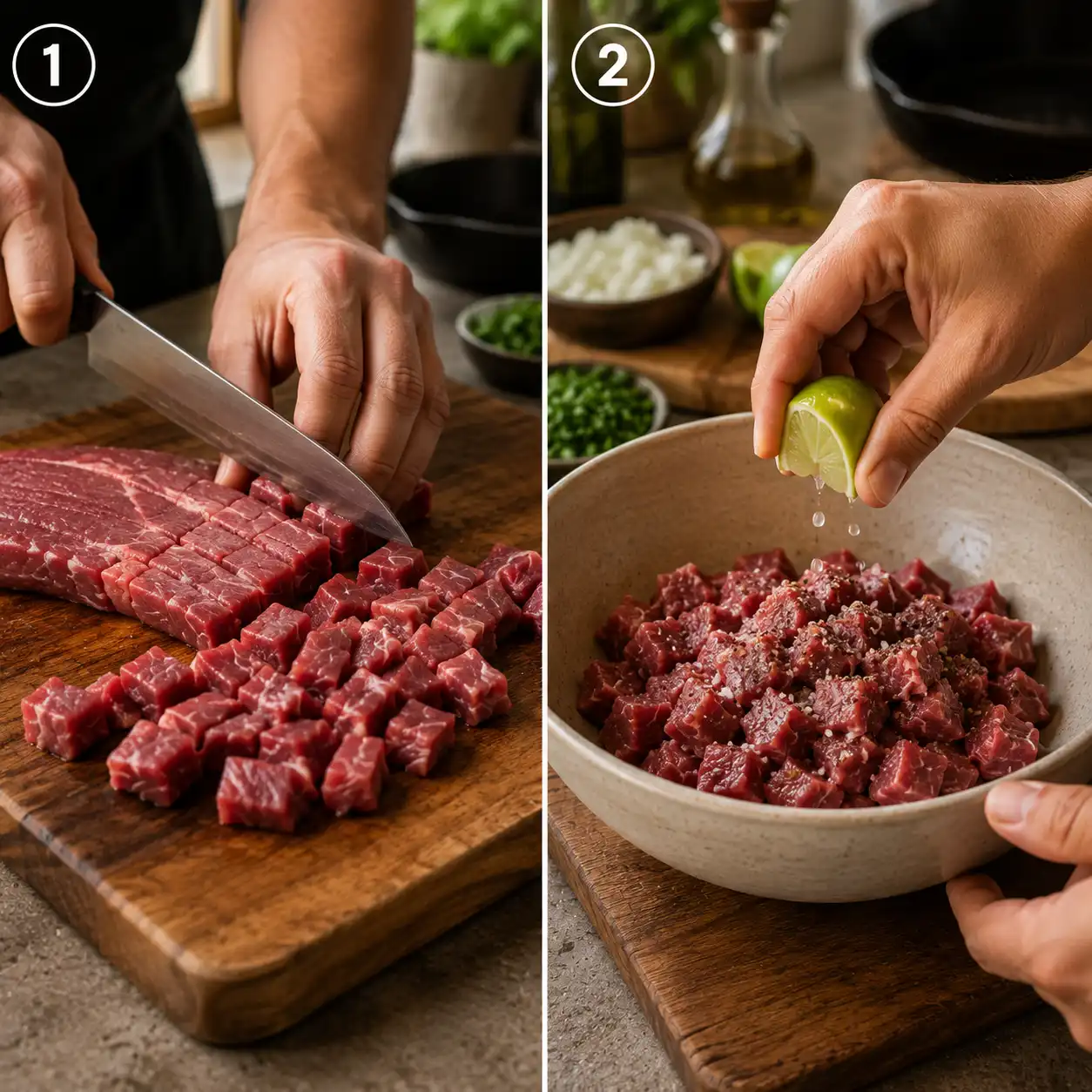
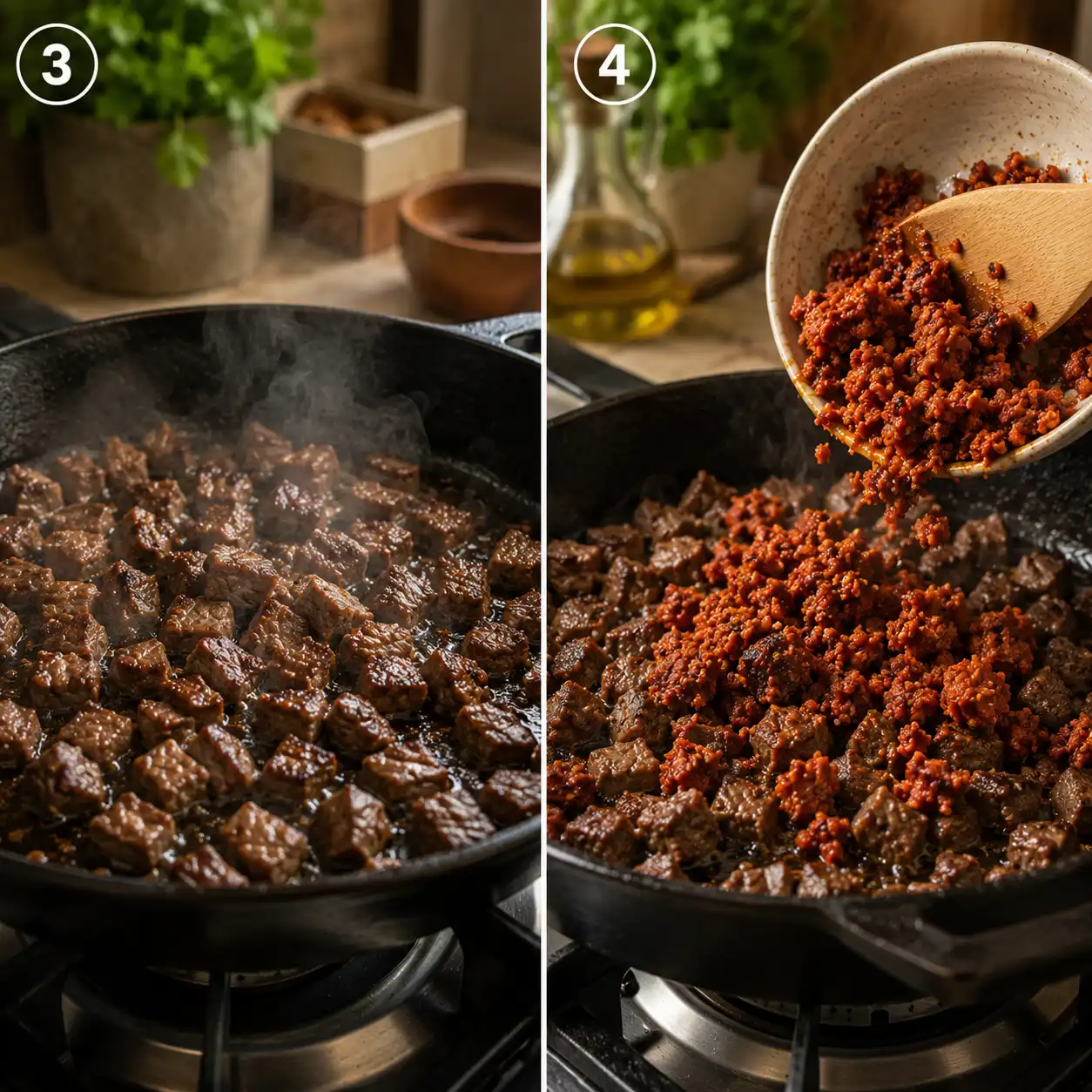
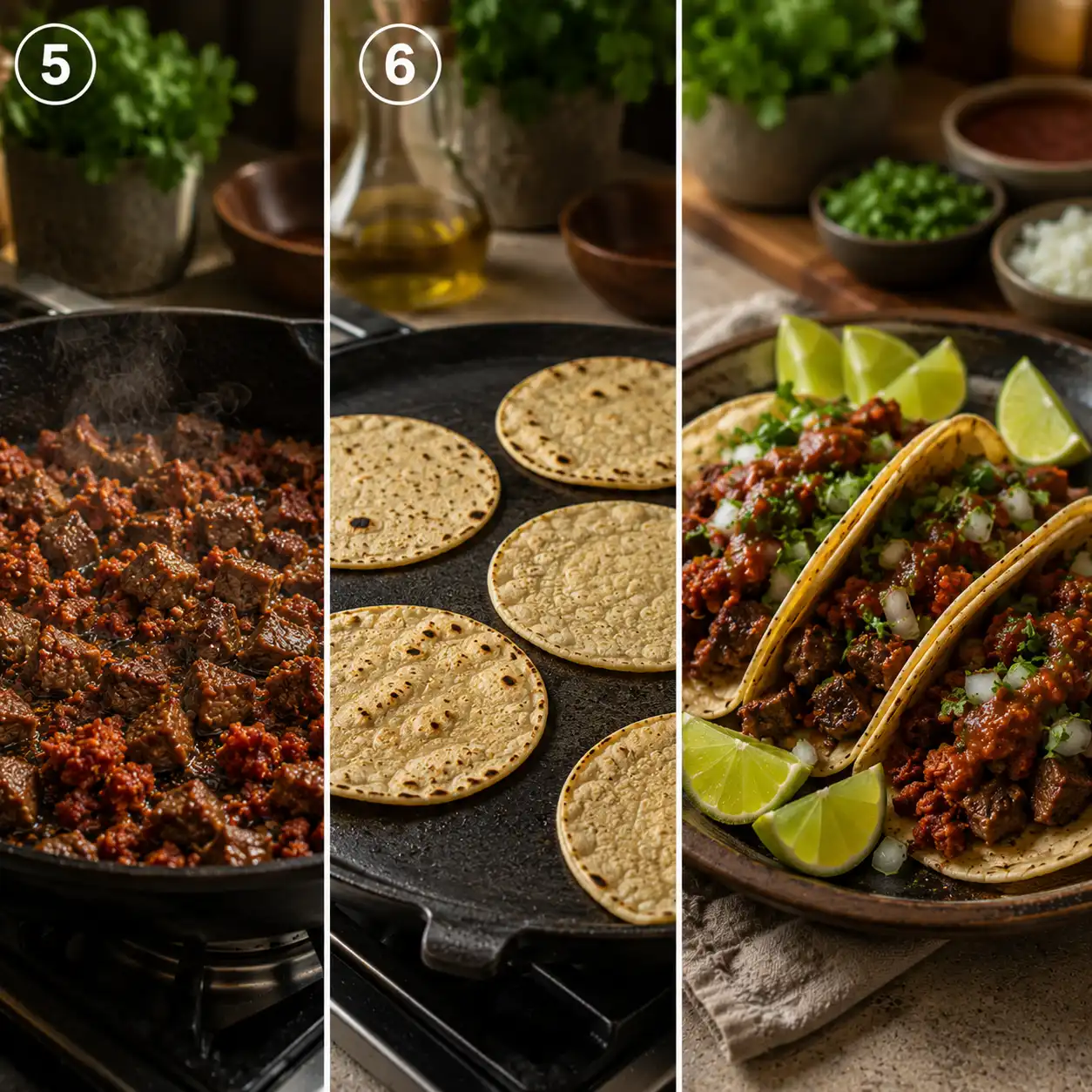
Technical Comparison of Meat Components
When constructing a campechano taco, it helps to understand how the two main proteins contribute to the final product. The following table breaks down the characteristics of the beef and the beef chorizo used in this recipe.
tbody
| Component | Primary Function | Texture Profile | Key Flavors |
|---|---|---|---|
| Beef Asada (Steak) | Main Protein Base | Chewy, firm, seared | Savory, Umami, Char |
| Beef Chorizo | Flavor Agent | Soft, crumbly, oily | Smoky, Spicy, Garlic |
| Onion & Cilantro | Fresh Garnish | Crunchy, crisp | Sharp, Herbal, Bright |
Mastering Salsas and Garnishes
The Importance of Acidity
Because the campechano taco is inherently rich and savory, it requires a hit of acid to cut through the fats. Freshly squeezed lime juice is non-negotiable. The citric acid brightens the spices in the beef chorizo and highlights the natural saltiness of the steak. Additionally, pickled red onions or a squeeze of salsa verde made with tomatillos can provide a sharp contrast that keeps each bite feeling fresh. This balance is a hallmark of professional Mexican cooking and is essential for a high-quality home-cooked version.
Building a Signature Salsa Roja
A deep, smoky salsa roja is the traditional companion for a campechano taco. By toasting dried guajillo and de arbol chilies, you can create a sauce that carries a lingering heat without being overwhelming. Blending these with roasted tomatoes and garlic creates a thick, clingy sauce that stays on the meat rather than soaking through the tortilla. If you are short on time but still want a nutritious meal, you can look at these 30 healthy delicious 30 minute dinners for more quick meal ideas that prioritize flavor and health.
Side Dishes and Complementary Pairings
The Role of Grilled Onions (Cebollitas)
No plate of campechano taco servings is complete without “cebollitas,” or grilled knob onions. These are cooked on the same griddle as the meat, absorbing some of the residual flavors while the natural sugars in the onion caramelize. The result is a sweet, tender side dish that complements the spicy profile of the taco. They add a different dimension of texture and a mild sweetness that rounds out the savory meal perfectly.
Alternative Potato Sides
In some regions, crispy potatoes are added either inside the taco or served on the side. This adds a starchy element that makes the meal more filling. For a modern twist that uses less oil than traditional frying, you can prepare air fryer diced potatoes to serve alongside your tacos. The air fryer provides a crunch that mimics the texture of “papas fritas” found at street stalls while keeping the fat content significantly lower.
Pairing Your Tacos with Refreshing Beverages
Since the campechano taco features bold spices and savory fats, the ideal beverage should be cold and refreshing. Traditional Mexican “aguas frescas” are the gold standard for this. A hibiscus tea (jamaica) or a creamy horchata can provide a cooling effect on the palate. These non-alcoholic drinks are designed to balance the heat of the salsas used in street food. For a more festive occasion, a tropical mocktail punch offers a complex fruit profile that stands up well to the intense flavors of the beef and chorizo mixture.
Nutritional Considerations and Health Benefits
High Protein and Micronutrients
The campechano taco is a protein-dense meal option. Beef is an excellent source of vitamin B12, zinc, and iron, which are vital for energy levels and immune support. By focusing on lean cuts of beef and using turkey or beef-based chorizo, you can manage the calorie count while still enjoying a traditional taste. Research from Healthline’s analysis of beef nutrition suggests that when consumed as part of a balanced diet, lean beef provides essential amino acids necessary for muscle maintenance.
Gluten-Free and Natural Ingredients
For those with gluten sensitivities, the campechano taco is naturally a safe choice, provided it is served on 100% corn tortillas. Unlike flour tortillas, corn versions are lower in calories and higher in fiber. By making your own salsas and toppings, you avoid the hidden sugars and preservatives found in many store-bought condiments. This makes the taco a “clean” eating option that doesn’t feel like a sacrifice, fitting perfectly into a lifestyle focused on whole, unprocessed foods.
The Cultural Significance of Mixed Tacos
In Mexico, the “taquería” is more than just a place to eat; it is a social hub. The campechano taco represents a spirit of inclusivity and variety. It shows that different elements much like different people can come together to create something better than the sum of its parts. Ordering a “campechano” is often seen as the mark of a seasoned taco enthusiast who knows how to find the best flavors on the menu. This dish encourages a slow, appreciative style of eating where every garnish and every drop of lime juice contributes to the final experience.
Common Mistakes to Avoid
Overcrowding the Pan
One of the most frequent errors when making a campechano taco at home is overcrowding the skillet. If there are too many pieces of meat in the pan at once, the temperature drops, and the meat begins to steam rather than sear. This results in a gray, rubbery texture instead of the desired crispiness. Cook in small batches to maintain high heat and achieve that professional “street taco” crust on the beef.
Ignoring the Tortilla Quality
Many people focus entirely on the meat and forget that the tortilla is half the taco. A cold or dry tortilla will break under the weight of the meat and salsa. Always moisten your tortillas slightly with a damp paper towel or a spray of water before heating them on the comal. This creates steam that makes them soft and resilient enough to hold the heavy campechano taco filling without falling apart.
Conclusion
The campechano taco is a masterpiece of culinary balance, offering a sophisticated mix of savory beef and vibrant spices. By focusing on high-quality proteins and traditional preparation methods, anyone can recreate this street-food staple in their own kitchen. Whether you are hosting a gathering or looking for a nutritious weeknight meal, this taco provides a flavorful and satisfying solution. With the right salsas, fresh garnishes, and a commitment to quality ingredients, you can experience the authentic spirit of Mexican gastronomy one bite at a time.
FAQs
What does “campechano” mean in English?
In a culinary context, “campechano” translates roughly to “mixed” or “combined.” It refers to the practice of mixing different types of meats or seafood together in one dish to create a more complex flavor profile.
Is a campechano taco spicy?
The spice level of a campechano taco depends on the chorizo used and the salsa added at the end. The meat mixture itself is usually savory and aromatic rather than “hot,” allowing you to control the heat with your choice of salsa.
Can I make a vegetarian version of this taco?
Yes, you can create a vegetarian version by using soy-based chorizo and grilled mushrooms or seitan as the “beef” component. The key is to use the same spices paprika, cumin, and garlic to mimic the traditional taste.
Why are two tortillas often used for one taco?
This is known as a “copia” or backup. Because the campechano taco can be quite juicy due to the oils in the chorizo and the salsa, the second tortilla provides structural support to prevent the taco from breaking apart while you eat it.
How do I store leftover meat?
Leftover meat for a campechano taco can be stored in an airtight container in the refrigerator for up to three days. When reheating, use a hot skillet rather than a microwave to restore the crispy edges of the beef.