

Welcome to a vibrant world of flavor that traces its roots back to the ancient Mayan civilization. Cochinita pibil is more than just a meal; it is a celebration of tradition, aromatic spices, and slow-cooking techniques that result in some of the most tender and savory results you can imagine. Whether you are a seasoned home cook or a curious foodie, learning the secrets of this bright red, citrus-infused dish will change how you view slow-roasted meats forever. Let’s look at how you can bring the sunshine of the Yucatan Peninsula into your kitchen.
Table of Contents
The History and Origins of Cochinita Pibil
The Mayan Roots of the Pib
The term “pibil” comes from the Mayan word “pib,” which refers to an underground earth oven. Historically, the Maya people used this method to cook various meats and vegetables, wrapping them in leaves and burying them over hot coals. This subterranean roasting creates a unique environment where the temperature stays consistent, and the moisture remains trapped. When you make cochinita pibil today, you are participating in a culinary ritual that has lasted for centuries, even if you are using a modern oven instead of a hole in your backyard.
A Fusion of Worlds
While the technique is purely indigenous, the flavors we associate with cochinita pibil today are a beautiful mix of local and imported ingredients. When new ingredients arrived in Mexico centuries ago, the local people integrated them into their traditional “pib” cooking. They combined the earthy, peppery notes of achiote a native seed with the sharp acidity of citrus. This combination defines the cochinita pibil profile: a balance of deep red color, earthy spice, and a tangy finish that cuts through the richness of the protein. The World History Encyclopedia provides a fascinating look at how these ancient civilizations influenced modern culinary practices across the globe.
Print
Authentic Yucatan Cochinita Pibil
A traditional Mayan-inspired slow-roasted pork dish featuring earthy achiote, bright citrus, and tender meat wrapped in banana leaves.
- Total Time: 4 hours 30 minutes
- Yield: 8 servings 1x
Ingredients
- 4 lbs pork shoulder, cut into 2-inch chunks
- 3.5 oz achiote paste
- 1 cup bitter orange juice (or 1/2 cup orange + 1/2 cup lime juice)
- 4 cloves garlic, minced
- 1 tsp dried Mexican oregano
- 1/2 tsp ground cumin
- 1/4 tsp ground cloves
- 1 tsp salt
- 1/2 tsp black pepper
- 2 large banana leaves, softened over a flame
- 2 red onions, thinly sliced
- 2 habanero peppers, minced
- 1/2 cup white vinegar
Instructions
- Step 1: Blend Marinade – Combine achiote paste, citrus juice, garlic, oregano, cumin, cloves, salt, and pepper in a blender until smooth.
- Step 2: Marinate Pork – Place pork chunks in a large bowl, cover with the marinade, and refrigerate for at least 4 hours or overnight.
- Step 3: Prepare Leaves – Briefly pass banana leaves over an open flame until they become pliable and glossy.
- Step 4: Line Dish – Line a heavy baking dish or Dutch oven with the softened banana leaves, leaving plenty of overhang to wrap the meat.
- Step 5: Pack Meat – Place the marinated pork and all remaining liquid inside the leaves, then fold the overhang over to seal tightly.
- Step 6: Roast Pork – Cover the dish with a lid or foil and bake at 325°F (165°C) for 4 hours until the meat is fork-tender.
- Step 7: Pickle Onions – Mix sliced red onions, habaneros, vinegar, and a pinch of salt in a bowl; let sit while the pork cooks.
- Step 8: Shred Meat – Remove pork from the oven, shred into large pieces using two forks, and toss with the accumulated cooking juices.
- Step 9: Final Serve – Serve the tender pork on warm corn tortillas topped with the spicy pickled red onions.
Notes
If you cannot find bitter oranges, a mix of naval orange and lime juice perfectly replicates the authentic Yucatan tang.
- Prep Time: 30 minutes
- Cook Time: 4 hours
- Category: Main Course
- Method: Slow Roasting
- Cuisine: Mexican
- Diet: Gluten-Free
Nutrition
- Serving Size: 6 oz
- Calories: 420 kcal
- Sugar: 3 g
- Sodium: 780 mg
- Fat: 28 g
- Saturated Fat: 10 g
- Unsaturated Fat: 18 g
- Trans Fat: 0.1 g
- Carbohydrates: 9 g
- Fiber: 2 g
- Protein: 32 g
- Cholesterol: 115 mg
Keywords: Cochinita Pibil, Yucatan, Achiote, Slow Roasted Pork, Mayan Food, Mexican Tacos
Essential Ingredients for Success
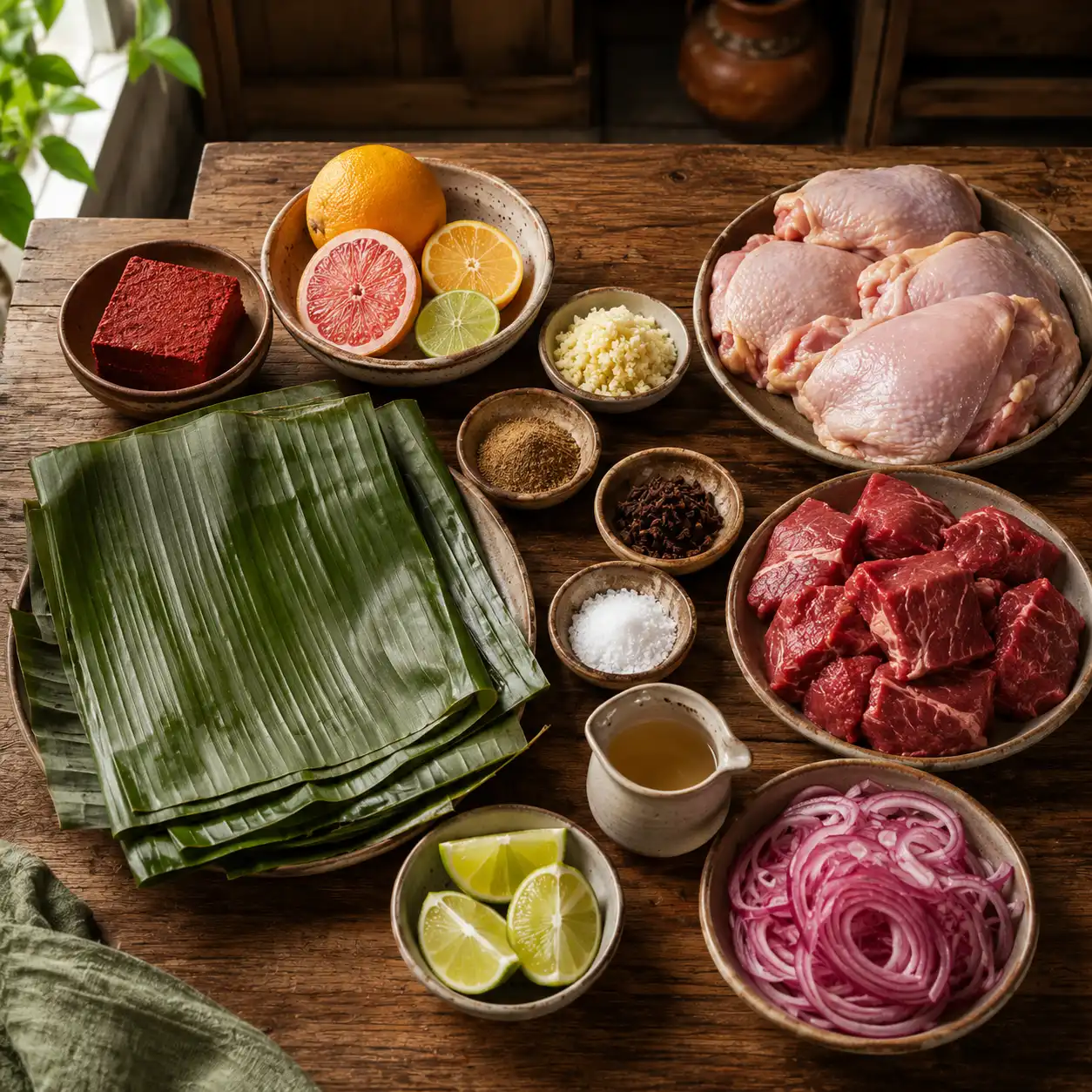
Achiote: The Heart of the Color
You cannot have cochinita pibil without achiote. Derived from the seeds of the annatto tree, achiote paste gives the dish its iconic deep orange-red hue and a mild, nutty flavor. In many specialty stores, you can find it as a solid block that you dissolve into citrus juice. This ingredient is so vital that without it, the dish simply isn’t pibil. Annatto is also prized for its natural properties; according to nutritional research reports, these seeds are rich in antioxidants like carotenoids, which give the paste its vivid color and offer various health benefits.
Bitter Orange and Acids
In the Yucatan, the liquid used to thin the achiote paste is traditionally “naranja agria” or bitter orange juice. It is much more sour than the sweet oranges found in most grocery stores. If you cannot find fresh bitter oranges, a common trick is to blend regular orange juice with fresh lime and grapefruit juice. This mimicry provides the sharp, bright acidity required to tenderize the meat and balance the heavy spices in the cochinita pibil marinade. For those who enjoy bright, citrusy profiles in other parts of their diet, you might also like this air fryer lemon pepper chicken breast for a quicker weekday meal.
Banana Leaves: The Secret Wrapper
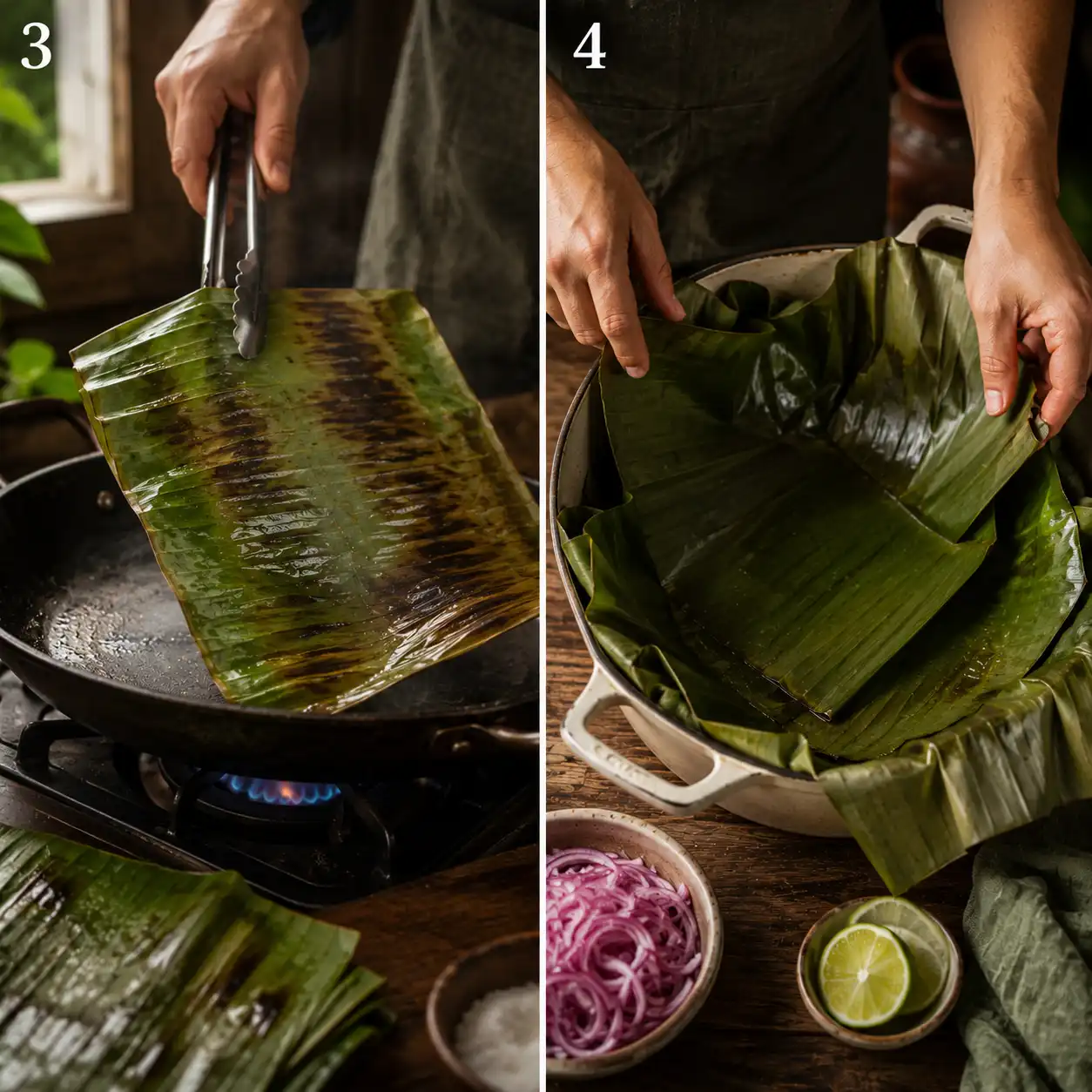
Banana leaves serve two main purposes: they protect the meat from drying out during the long roasting process and they impart a very subtle, grassy fragrance to the finished cochinita pibil. You can usually find these in the freezer section of international markets. Before using them, you must lightly pass them over an open flame or a hot pan to make them pliable. This prevents them from cracking when you fold them over your meat. If you absolutely cannot find them, parchment paper and heavy-duty foil can work, but you will miss that traditional aromatic touch.
Choosing Your Protein: A New Approach
Why Chicken or Beef Works Beautifully
While some traditions focus on a specific type of meat, the pibil method is incredibly versatile. You can create a stunning cochinita pibil using chicken thighs or beef chuck. Chicken thighs are particularly good because they stay juicy during the long cooking time and shred easily. Beef, on the other hand, offers a deeper, heartier flavor that stands up well to the bold achiote marinade. By focusing on these proteins, you make the dish accessible to a wider variety of dietary preferences while keeping the spirit of the Yucatan alive. If you enjoy learning about diverse flavor profiles, you might find that moroccan food offers a similarly rich use of spices and slow-cooking methods.
Preparation and Sizing
To get the best results, cut your meat into large chunks rather than roasting a whole bird or a massive roast. This increases the surface area, allowing the cochinita pibil marinade to coat every inch. For chicken, keeping the bone in can add extra flavor, though boneless thighs are much easier to shred once the cooking is finished. The goal is to reach a point where the meat pulls apart with the slightest touch of a fork.
| Protein Type | Recommended Cut | Cooking Time (Oven) | Texture Result |
|---|---|---|---|
| Chicken | Bone-in Thighs | 2.5 – 3 Hours | Soft, delicate shreds |
| Beef | Chuck Roast / Brisket | 4 – 5 Hours | Rich, ropey strands |
| Turkey | Legs and Thighs | 3 – 4 Hours | Hearty and savory |
Step-by-Step Guide to Making Cochinita Pibil
Creating this dish is a labor of love that rewards you with incredible aromas filling your home. It is one of those healthy one pan dinners if you use a large Dutch oven or roasting pan. Follow these steps to achieve perfection.
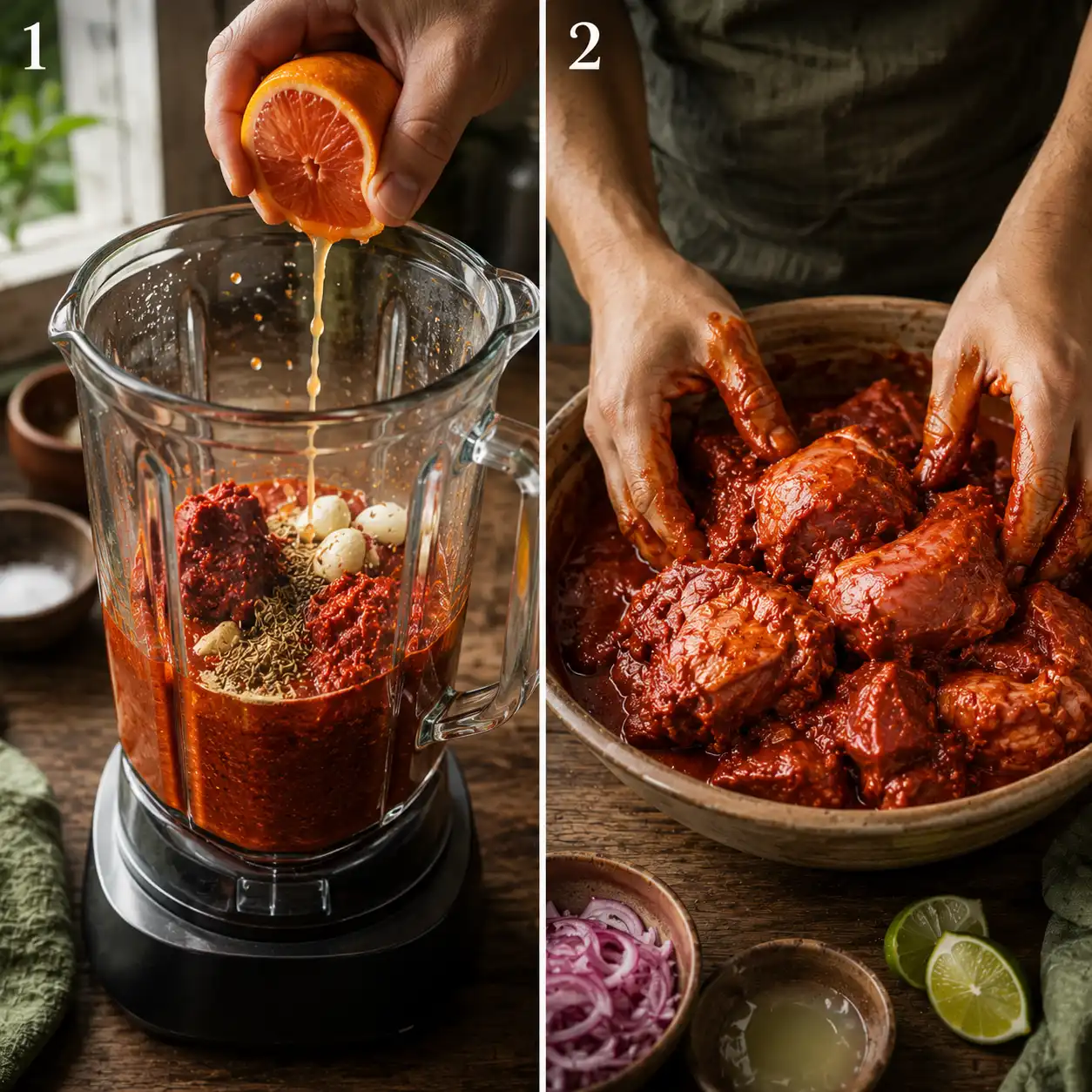
- Step 1: Prepare the Marinade – Blend achiote paste, bitter orange juice (or your citrus mix), garlic, cumin, cloves, and salt until completely smooth. The mixture should be a thick, vibrant red liquid.
- Step 2: Marinate the Meat – Place your meat chunks in a glass bowl and pour the marinade over them. Use your hands to make sure every piece is covered. Let this sit for at least 4 hours, or ideally overnight in the refrigerator.
- Step 3: Prep the Banana Leaves – Briefly heat the banana leaves over a stove burner until they turn a darker, glossy green and become soft. Line your roasting pan or Dutch oven with the leaves, overlapping them so they hang over the edges.
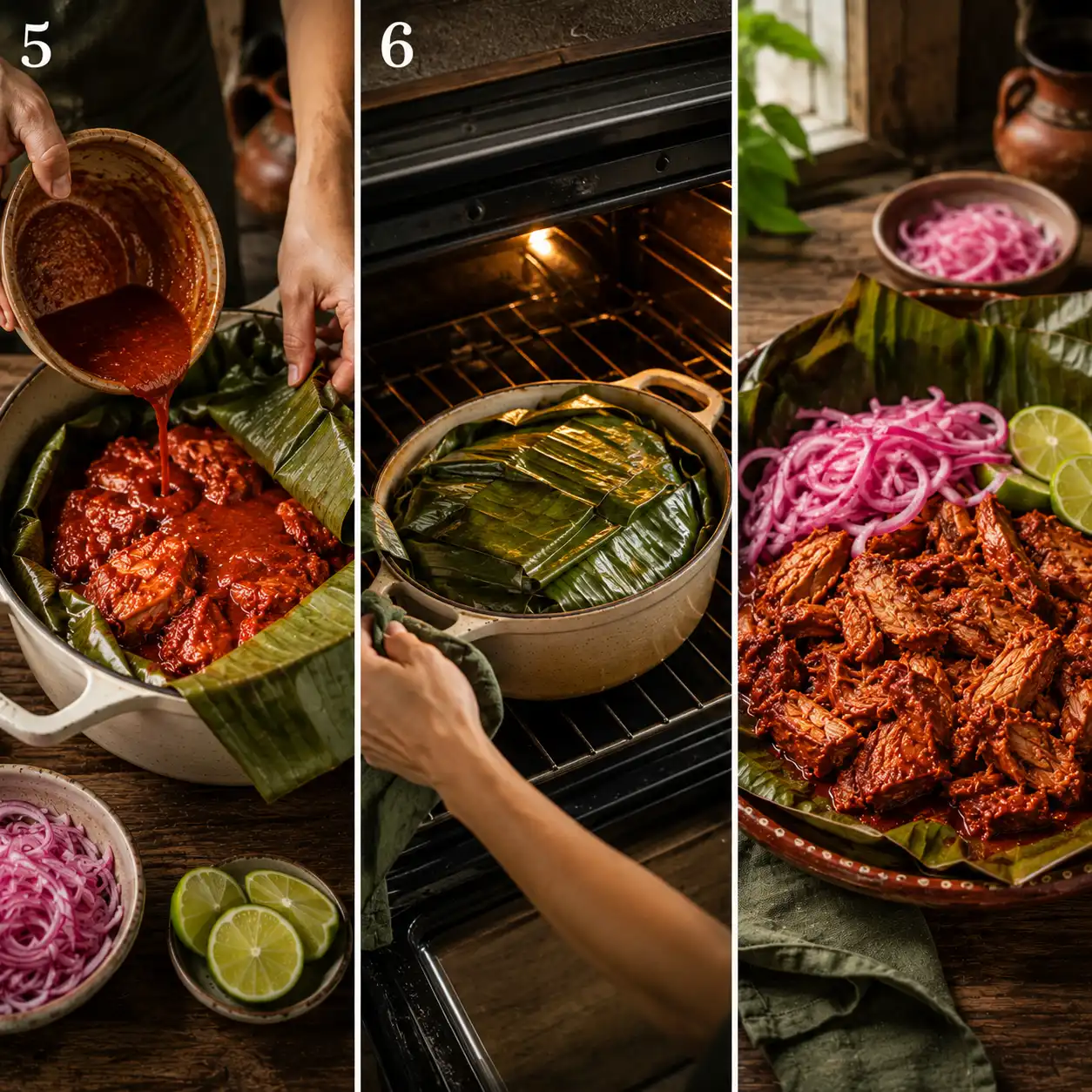
- Step 4: Layer and Seal – Place the marinated meat inside the leaf-lined pan. Pour any remaining marinade over the top. Fold the leaves over the meat to create a sealed package. Cover the pan tightly with a lid or foil.
- Step 5: Slow Roast – Place the pan in a low oven (around 300°F or 150°C). For chicken, cook for about 3 hours. For beef, you may need up to 5 hours. The cochinita pibil is done when it is tender enough to shred effortlessly.
- Step 6: Shred and Mix – Carefully open the leaves (watch out for the steam!). Move the meat to a bowl and shred it. Pour the juices from the pan back onto the shredded meat to keep it moist and flavorful.
The Importance of Pickled Red Onions
The Perfect Contrast
A plate of cochinita pibil is never complete without “Xnipec” or simple pickled red onions. The bright pink color of the onions looks beautiful against the red meat, but more importantly, the vinegar and crunch provide a necessary contrast. The meat is soft, warm, and earthy, while the onions are cold, crisp, and sharp. This pairing is what makes the dish feel balanced rather than heavy. Many people also add sliced habanero peppers to the onions for a kick of heat, but you can leave those out if you prefer a milder experience.
How to Make Them
To make the onions, thinly slice a red onion and soak it in lime juice or mild vinegar with a pinch of salt and dried oregano. Let them sit for at least an hour. They will turn a brilliant magenta color. This simple side is a staple in Yucatan cooking and is the secret to a professional-looking cochinita pibil presentation. To wash down the heat and acidity of the meal, a refreshing watermelon limeade is a fantastic choice that keeps the tropical theme going.
Modern Cooking Methods
The Slow Cooker and Instant Pot
While the oven is a great way to mimic the “pib,” modern appliances offer even more convenience. A slow cooker is perfect for cochinita pibil because it maintains a low, steady heat over 8 hours, which is ideal for breaking down tough fibers in beef. If you are in a rush, a pressure cooker can produce tender results in about 60 to 90 minutes. You can still line the inner pot with banana leaves to keep that traditional flavor profile intact, even when using high-tech tools.
Reheating and Leftovers
One of the best things about cochinita pibil is that it tastes even better the next day. As the meat sits in the marinade juices, the flavors continue to marry and deepen. You can use leftovers for tacos, tortas (sandwiches), or even on top of a breakfast bowl. Simply heat it gently in a skillet with a little bit of the leftover juice to prevent it from drying out. It is a fantastic option for meal prep because it stays juicy and delicious throughout the week.
FAQs
What does Cochinita Pibil taste like?
It is a unique blend of flavors. It isn’t spicy-hot like some Mexican dishes; instead, it is deeply aromatic. You will taste the earthiness of the achiote, the sharp tang of citrus, and the warmth of cloves and cumin. The texture is very soft and succulent.
Can I make this without banana leaves?
Yes, you can. While the leaves add a specific aroma, you can use parchment paper or just a very tightly sealed Dutch oven. The main goal is to steam the meat in its own juices and the marinade, so as long as the moisture cannot escape, you will get good results.
Is Cochinita Pibil healthy?
When made with lean proteins like chicken breast or trimmed beef, it can be a very healthy option. It relies on spices and citrus for flavor rather than heavy fats or sugars. It is also naturally gluten-free if served with corn tortillas or over rice.
Where can I find achiote paste?
Most Hispanic grocery stores carry it in small cardboard boxes. You can also find it in the international aisle of many large supermarkets or order it online. Look for “Achiote Molido” or “Recado Rojo.”
Bringing the Yucatan to Your Table
Cooking cochinita pibil is an invitation to slow down and appreciate the process of building deep, complex flavors. By using the right spices and a bit of patience, you can recreate a masterpiece that has satisfied people for generations. Whether you serve it at a large family gathering or as a special weekend treat, this dish is bound to become a favorite in your household. Its unique look and unforgettable taste prove that traditional methods, even when adapted for a modern kitchen, truly stand the test of time. Enjoy the process, and most importantly, enjoy every flavorful bite of your homemade cochinita pibil.