

Making a traditional tzatziki recipe at home is one of the simplest ways to bring the bright, fresh flavors of the Mediterranean to your kitchen. This versatile dip relies on a few high-quality ingredients, primarily thick Greek yogurt and crisp cucumbers, to create a cooling sensation that pairs perfectly with grilled meats and warm breads. Whether you are hosting a summer gathering or looking for a healthy snack, mastering a homemade tzatziki recipe provides a refreshing addition to any meal prep routine or dinner party spread.
Table of Contents
The History and Origin of the Classic Tzatziki Recipe
Mediterranean Roots
The roots of the modern tzatziki recipe are deeply embedded in the culinary traditions of Southeast Europe and the Middle East. While many associate the dish exclusively with Greece, similar preparations exist throughout the region under different names. In Turkey, a thinner version is known as cacık, while in the Balkans, you might find similar yogurt-based cold soups. This Wikipedia article on Tzatziki explains how the dish evolved from ancient traditions of mixing yogurt with herbs and vegetables to provide relief during hot summer months. Over centuries, the Greek version became standardized into the thick, garlicky dip we love today.
The Science of the Dip
An expert tzatziki recipe is more than just a mixture of ingredients; it is a lesson in moisture management. The thick texture comes from using strained yogurt, which has a lower water content than standard varieties. When you combine this with grated cucumber, the biggest challenge is preventing the sauce from becoming watery. By understanding the chemistry of salt and osmosis, you can produce a dip that remains creamy and thick for several days in the refrigerator without separating or losing its signature body.
Print
Authentic Tzatziki Recipe: The Secret to Creamy Greek Garlic Sauce
A thick, creamy Greek dip made with strained yogurt, grated cucumber, and garlic. This traditional Mediterranean staple is refreshing, cooling, and pairs perfectly with grilled meats or warm pita bread.
- Total Time: 45 minutes
- Yield: 2 cups 1x
Ingredients
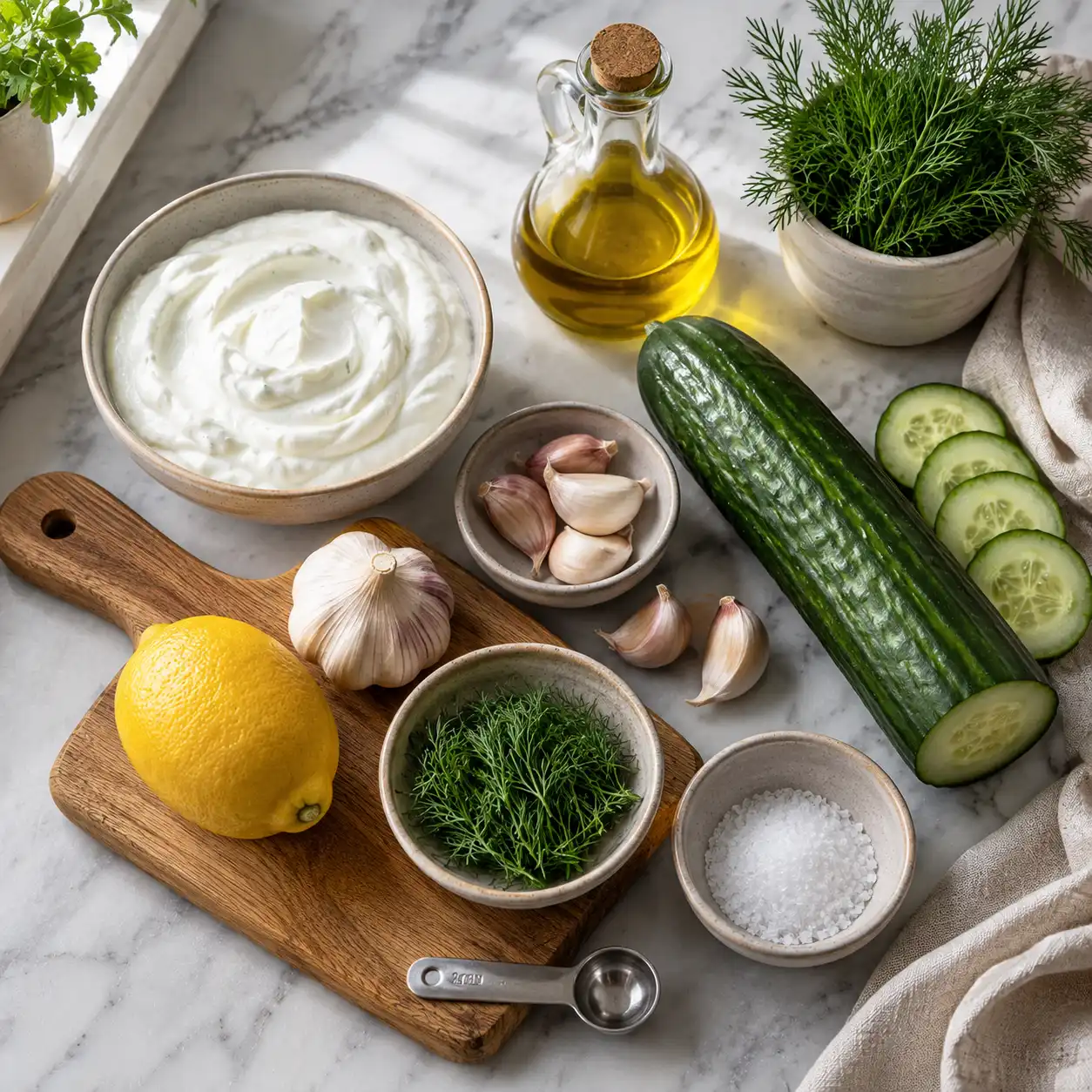
- 2 cups full-fat Greek yogurt (strained)
- 1 large English cucumber
- 3 cloves garlic, finely minced
- 2 tablespoons extra virgin olive oil
- 1 tablespoon fresh lemon juice
- 1 teaspoon sea salt
- 2 tablespoons fresh dill, finely chopped
- 1/2 teaspoon cracked black pepper
Instructions
- Step 1: Grate Cucumber – Use a box grater to shred the cucumber onto a clean kitchen towel.
- Step 2: Salt Cucumber – Sprinkle the grated cucumber with a pinch of salt and let it sit for 5 minutes.
- Step 3: Extract Moisture – Squeeze the towel firmly over a sink to remove as much liquid as possible from the cucumber.
- Step 4: Prepare Base – In a medium mixing bowl, whisk the Greek yogurt, minced garlic, olive oil, and lemon juice.
- Step 5: Fold Ingredients – Gently stir the dried cucumber and chopped fresh dill into the yogurt mixture.
- Step 6: Season – Add the remaining salt and black pepper, stirring to incorporate all flavors.
- Step 7: Chill Sauce – Cover and refrigerate for at least 30 minutes to allow the flavors to meld and the texture to thicken.
- Step 8: Serve – Garnish with a drizzle of olive oil and serve cold.
Notes
For the best results, use a kitchen towel or cheesecloth to squeeze the cucumber; moisture is the enemy of a thick tzatziki. Always use full-fat yogurt for maximum creaminess.
- Prep Time: 15 minutes
- Cook Time: 0 minutes
- Category: Appetizer
- Method: No-cook
- Cuisine: Greek
- Diet: Vegetarian, Gluten-Free, Low-Carb
Nutrition
- Serving Size: 0.25 cup
- Calories: 75 kcal
- Sugar: 2 g
- Sodium: 210 mg
- Fat: 5 g
- Saturated Fat: 3 g
- Unsaturated Fat: 2 g
- Trans Fat: 0.1 g
- Carbohydrates: 3.5 g
- Fiber: 0.5 g
- Protein: 4.5 g
- Cholesterol: 10 mg
Keywords: tzatziki, greek dip, cucumber sauce, mediterranean, healthy snacks
Choosing the Best Ingredients for Your Tzatziki Recipe
The Importance of Full-Fat Greek Yogurt
To achieve the best results with your tzatziki recipe, always start with high-quality, plain Greek yogurt. Avoid low-fat or non-fat versions if possible, as the fat content helps carry the flavors of the garlic and herbs. The fat also provides a velvety mouthfeel that defines a professional-grade sauce. If you only have regular yogurt on hand, you must strain it through cheesecloth for several hours to reach the necessary thickness. This step is vital because the yogurt serves as the structural foundation for the entire dip.
Selecting and Preparing Cucumbers
The type of cucumber you use for your tzatziki recipe matters significantly. English cucumbers or Persian cucumbers are the top choices because they have thinner skins and fewer seeds. If you use a standard garden cucumber, you should peel it and scrape out the seeds with a spoon before grating. Moisture control starts here; once the cucumber is grated, you must squeeze out every drop of excess liquid. Skipping this part will result in a thin, runny sauce that fails to cling to your food properly.
The Role of Garlic and Herbs
Fresh garlic is a non-negotiable part of any authentic tzatziki recipe. Finely grating the garlic or turning it into a paste with a pinch of salt allows it to distribute evenly throughout the yogurt. As for herbs, fresh dill is the most common choice, offering a feathery, bright flavor. Some regions also incorporate fresh mint for an extra cooling effect. Always use fresh herbs rather than dried ones to maintain the vibrant profile that makes this sauce so distinctive. A splash of lemon juice and high-quality extra virgin olive oil provide the necessary acidity and richness.
| Ingredient | Recommended Amount | Key Benefit |
|---|---|---|
| Greek Yogurt | 2 Cups (Strained) | Provides a thick, protein-rich base |
| English Cucumber | 1 Medium (Grated) | Adds crunch and cooling hydration |
| Fresh Garlic | 2-3 Cloves (Minced) | Delivers a bold, savory bite |
| Extra Virgin Olive Oil | 2 Tablespoons | Creates a smooth, rich texture |
| Lemon Juice | 1 Tablespoon | Adds brightness and cuts through fat |
Step-by-Step Tzatziki Recipe Guide
Preparation and Moisture Extraction
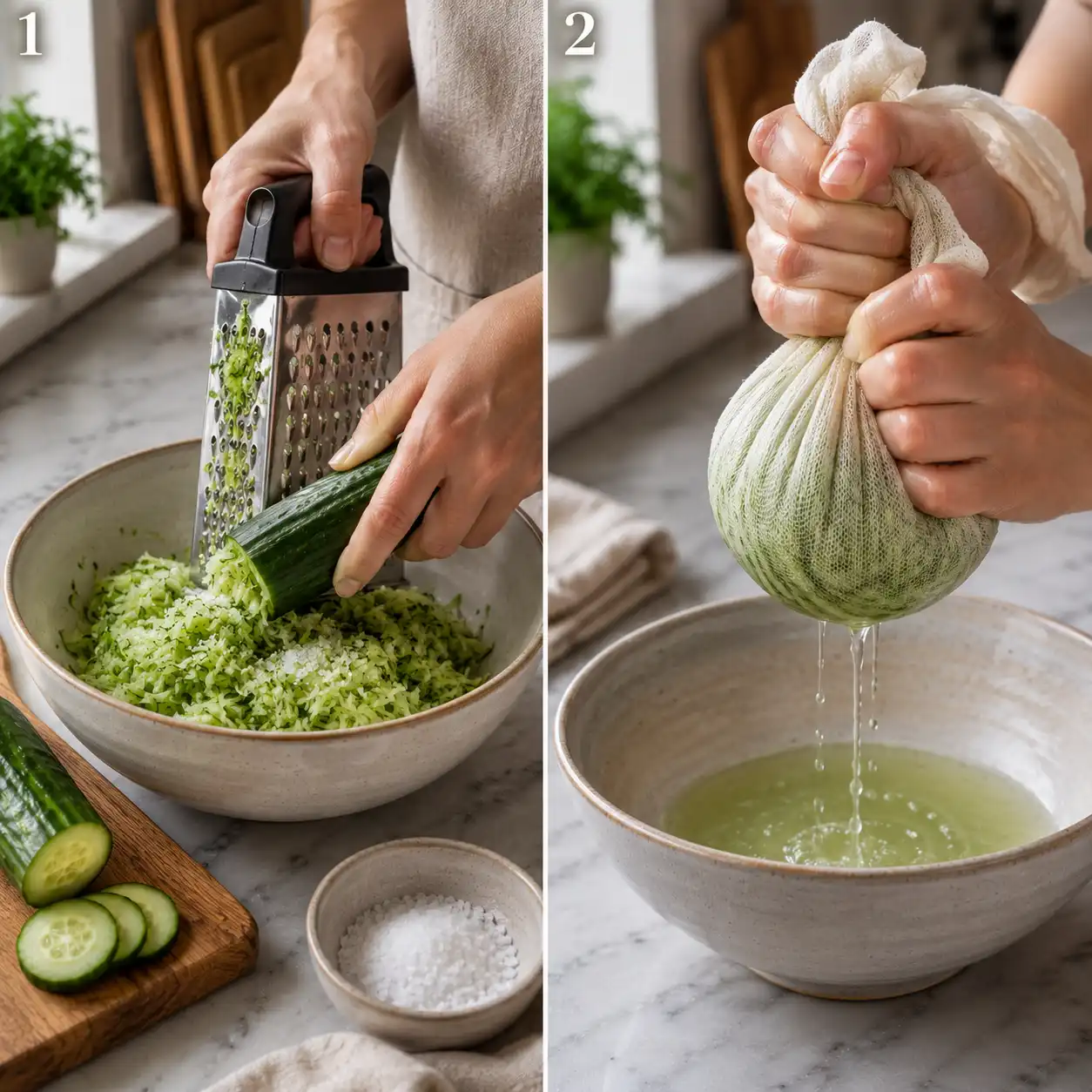
Step 1: Grate the Cucumber – Use the large holes of a box grater to shred your cucumber into a clean bowl. Do not worry about the liquid at this stage, but try to work quickly to keep the vegetable fresh. Once finished, sprinkle a half-teaspoon of sea salt over the shreds and let them sit for about ten minutes. This salt helps draw out the internal moisture that would otherwise ruin the consistency of your tzatziki recipe later on.
The Squeezing Process
Step 2: Squeeze and Drain – Transfer the salted cucumber to a clean kitchen towel or several layers of cheesecloth. Wrap the cloth tightly and squeeze with all your strength over the sink. You will be surprised by how much green juice comes out. Continue squeezing until the bundle feels dry and compact. This is the single most important step in a successful tzatziki recipe. Once dry, place the cucumber pulp into a large mixing bowl.
Mixing and Emulsifying
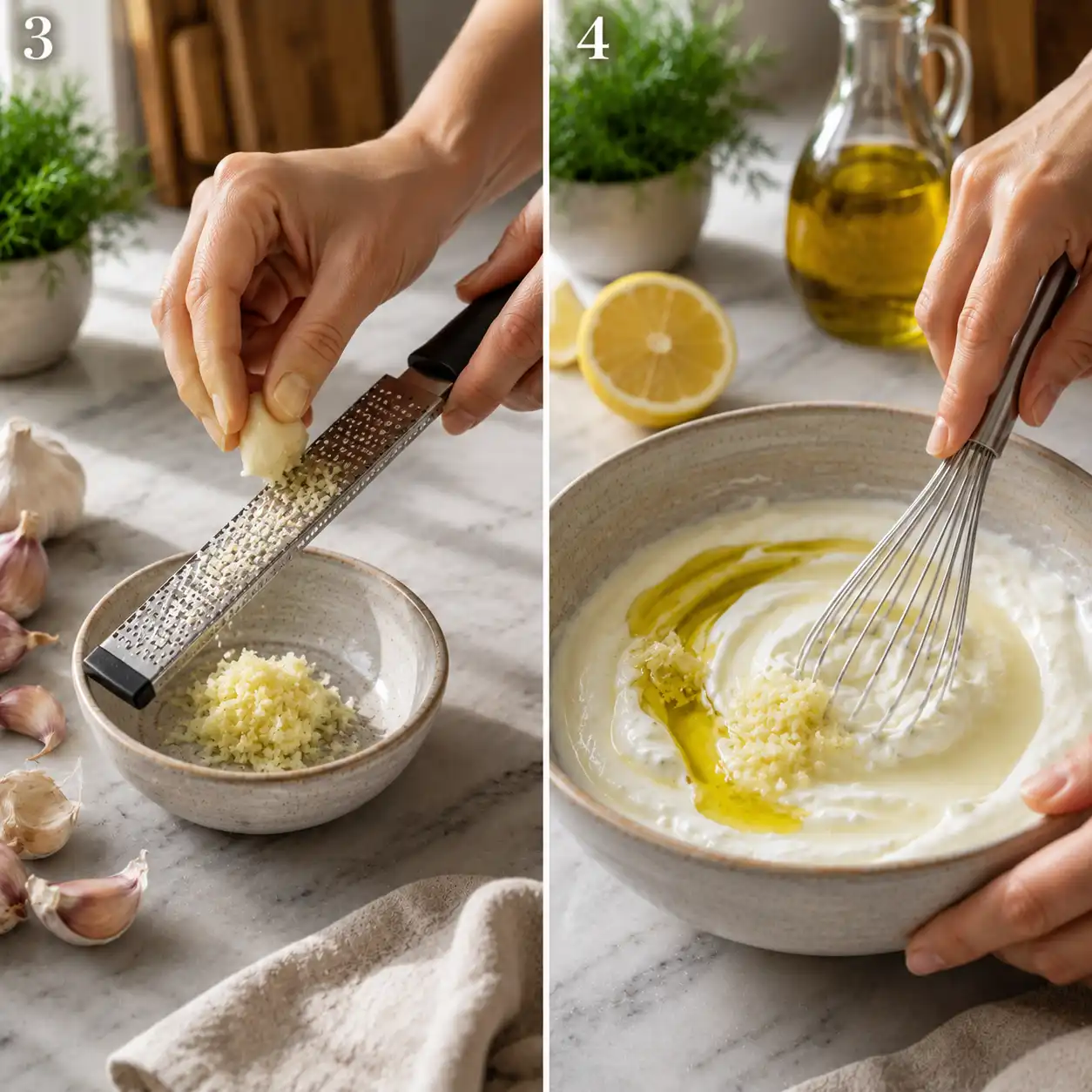
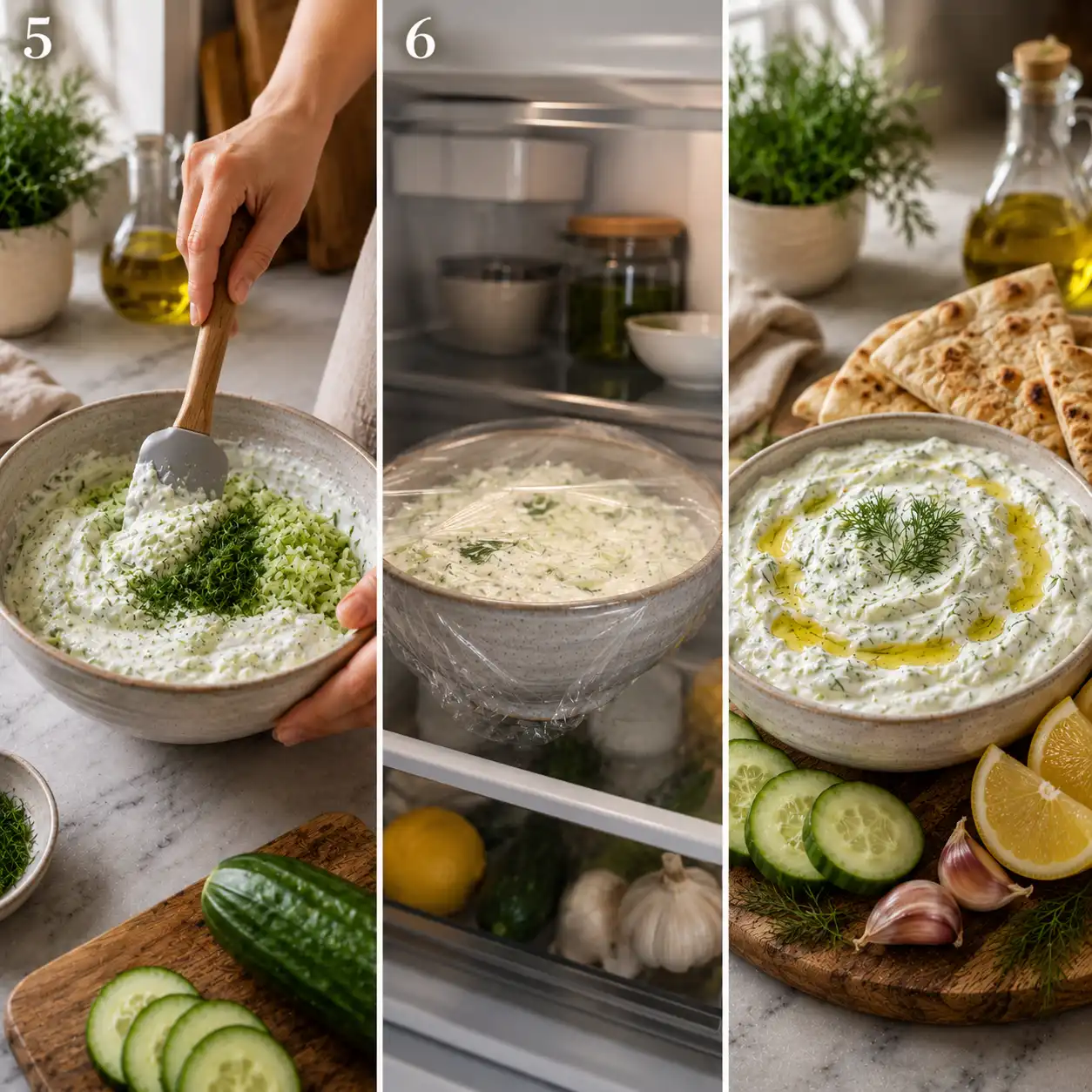
Step 3: Combine Ingredients – Add the thick Greek yogurt, minced garlic, lemon juice, and olive oil to the bowl with the cucumber. Stir the mixture gently with a spoon or spatula. After the base is mixed, fold in your finely chopped fresh dill. Taste the sauce and add more salt or a crack of black pepper if needed. A well-balanced tzatziki recipe should have a clear tang from the yogurt and lemon, balanced by the richness of the oil and the sharp kick of the garlic.
The Resting Phase
Step 4: Chill and Set – While you can eat the sauce immediately, a great tzatziki recipe benefits from resting in the fridge for at least thirty minutes. Chilling allows the garlic to mellow and the herbs to infuse the yogurt with their oils. Cover the bowl tightly with plastic wrap to prevent the yogurt from absorbing other smells in the refrigerator. When you are ready to serve, give it one final stir and perhaps a small drizzle of olive oil on top for a beautiful presentation.
Health Benefits of This Tzatziki Recipe
A Probiotic Powerhouse
Incorporating this tzatziki recipe into your diet offers numerous health advantages. Because the primary ingredient is fermented Greek yogurt, it is packed with probiotics that support gut health and digestion. Furthermore, this sauce is naturally high in protein, making it a much more nutritious choice than mayonnaise-based dips. If you are focusing on high-protein low-carb meals, adding a dollop of tzatziki to your plate is an easy way to boost flavor without adding unnecessary sugars or processed fats.
Low-Calorie Flavor
Compared to other creamy dressings, a homemade tzatziki recipe is relatively low in calories. It provides a massive amount of flavor for a small caloric footprint, which is helpful for those managing their weight. The inclusion of cucumbers adds a small amount of fiber and hydration, while the garlic provides antioxidants. It fits perfectly into various dietary patterns, including the Mediterranean diet and the keto lifestyle, especially when served with appropriate sides that keep your macros in check.
How to Serve and Pair Your Tzatziki Recipe
Classic Bread Pairings
One of the most satisfying ways to enjoy this sauce is by dipping fresh bread into it. While traditional pita is the standard choice, those following specific dietary restrictions have excellent alternatives. For a low-carbohydrate option that still feels authentic, try serving your dip alongside a keto naan bread recipe. The soft, chewy texture of the bread acts as a perfect vessel for the cool, garlicky yogurt, making for a delicious appetizer or side dish that won’t spike your blood sugar.
Complementary Side Dishes
Building a full Mediterranean spread involves balancing flavors and textures. This tzatziki recipe works wonderfully as a component of a larger platter. You might serve it next to a vibrant feta watermelon salad recipe to provide a savory contrast to the sweet fruit. The saltiness of the feta and the coolness of the yogurt create a harmonious dining experience. Because the sauce is so versatile, it can also function as a dressing for various vegetable-based dishes that require a creamy element.
Creative Uses for Leftover Sauce
If you have extra sauce from your tzatziki recipe, do not let it go to waste. It makes an incredible spread for sandwiches or wraps featuring grilled chicken or beef. You can even use it as a base for other salads. For instance, it can replace the traditional mayo in a creamy greek broccoli salad, adding a tangy twist and a boost of protein. The acidity in the lemon and yogurt also makes it a decent marinade for poultry if you need to tenderize meat before grilling.
Troubleshooting Common Tzatziki Recipe Issues
Fixing a Runny Sauce
If your tzatziki recipe ends up too thin, the most likely culprit is the cucumber water. To fix it, you can stir in a little more thick Greek yogurt to increase the density. Next time, make sure you use a heavy-duty towel to squeeze the cucumbers. Another tip is to avoid using a food processor for the cucumbers, as this turns them into a puree and releases too much cellular liquid. Grating by hand maintains the structural integrity of the vegetable bits, which helps the sauce stay thick.
Mellowing Strong Garlic
Sometimes the garlic in a tzatziki recipe can feel overwhelmingly sharp, especially if the cloves are very fresh. If you find the bite too intense, let the sauce sit in the refrigerator for twenty-four hours; the acidity in the yogurt will naturally cook the garlic slightly and soften its pungency. You can also try blanching the garlic cloves in boiling water for one minute before mincing them, or use a microplane to create a very fine paste that blends in more smoothly without leaving large, spicy chunks.
Storing Your Homemade Tzatziki
Fridge Life and Freshness
Your homemade tzatziki recipe will stay fresh in the refrigerator for about three to four days. Store it in an airtight container to keep it from drying out or picking up odors from other foods. You may notice a small amount of liquid pooling on the surface after a day or two; this is normal whey separating from the yogurt. Simply give the sauce a quick stir to incorporate it back into the dip. Do not freeze tzatziki, as the texture of the yogurt and cucumbers will break down completely upon thawing, leaving you with a grainy, unappealing mess.
Signs of Spoilage
Because this tzatziki recipe uses dairy, you should be mindful of spoilage. If the yogurt develops an unpleasantly sour smell, shows any signs of mold, or turns a yellowish color, it is time to discard it. To maximize the shelf life, always use a clean spoon when scooping the sauce out of the container to prevent introducing bacteria. Freshness is key to the flavor, so it is often better to make smaller batches more frequently than one giant batch that might go bad before you can finish it.
Conclusion
Mastering a traditional tzatziki recipe allows you to enjoy a staple of Greek cuisine right in your own home. By focusing on the quality of your yogurt and the proper preparation of your cucumbers, you can create a dip that is far superior to any store-bought version. This cooling, garlicky sauce is not only delicious but also supports a healthy lifestyle. Whether paired with grilled meats, fresh vegetables, or warm bread, your homemade tzatziki recipe is certain to become a favorite part of your culinary repertoire.
FAQs
Can I make a tzatziki recipe with dried dill?
While you can use dried dill in a pinch, the flavor will not be as bright or fresh. If you must use dried herbs, use about one-third of the amount called for in the fresh version, as dried herbs are more concentrated. Let the sauce sit longer so the dried herbs have time to rehydrate and release their flavor.
Is this tzatziki recipe keto-friendly?
Yes, this tzatziki recipe is naturally low in carbohydrates, making it excellent for a keto diet. Just be sure to use full-fat Greek yogurt and serve it with low-carb dippers like celery, bell peppers, or keto-friendly bread alternatives.
Can I use sour cream instead of Greek yogurt?
Sour cream can be used as a substitute, but it will change the flavor profile. Sour cream is richer and less tangy than Greek yogurt. It also lacks the high protein content and probiotics found in yogurt. If you use sour cream, you might want to add a bit more lemon juice to mimic the traditional tanginess of a classic tzatziki recipe.
How do I make my tzatziki extra thick?
The secret to an extra thick tzatziki recipe is straining the yogurt overnight in the fridge using cheesecloth. This removes the whey and leaves you with a “yogurt cheese” consistency. Additionally, ensuring the cucumbers are extremely dry before adding them to the mix is crucial for a thick, dipable texture.
What is the best way to mince garlic for this recipe?
Using a microplane or a very fine grater is the best method. This turns the garlic into a paste, which allows the flavor to permeate the yogurt evenly without leaving large, crunchy bits of raw garlic in the sauce.