

Toum is much more than a simple condiment; it is a pillar of Levantine culinary tradition. This fluffy, ivory-white garlic sauce is famous for its intense aroma and cloud-like texture. Created through a careful emulsion of fresh garlic, oil, and lemon juice, toum provides a pungent kick that transforms ordinary meals into extraordinary feasts. Understanding how to create this sauce at home requires patience and precision, but the result is a versatile spread that outperforms any store-bought alternative.
Table of Contents
What Exactly is Toum?
A Cultural Staple of the Levant
In the heart of Lebanese cuisine, toum occupies a place of honor. The word itself literally translates to “garlic” in Arabic, which speaks to its primary identity. Unlike many Mediterranean sauces that use egg yolks or bread as a base, authentic toum relies solely on the natural emulsifying properties of garlic. This makes it naturally vegan and incredibly shelf-stable when compared to egg-based mayonnaise. Historically, families made this sauce using a mortar and pestle, grinding the cloves into a fine paste before slowly drizzling in oil. Today, food processors have made the process faster, yet the fundamental requirement for a slow, steady hand remains unchanged to achieve that perfect, airy consistency.
The Texture and Flavor Profile
The hallmark of a high-quality toum is its texture. It should not be runny or oily; instead, it should resemble a stiff meringue or a thick whipped cream. When you dip a piece of bread into it, the sauce should hold its shape perfectly. The flavor is unapologetically bold. It starts with a sharp, spicy bite from the raw garlic, which is then mellowed by the neutral oil and balanced with the bright acidity of fresh lemon juice. Because it lacks dairy or egg, the purity of the garlic shines through, making it an essential companion for grilled meats and roasted vegetables throughout the Middle East.
Print
Mastering Toum: The Definitive Guide to Lebanese Garlic Sauce
A traditional Lebanese garlic sauce known for its fluffy, ivory-white texture and intense aroma, created through a precise emulsion of garlic, oil, and lemon juice.
- Total Time: 21 minutes
- Yield: 4 cups 1x
Ingredients
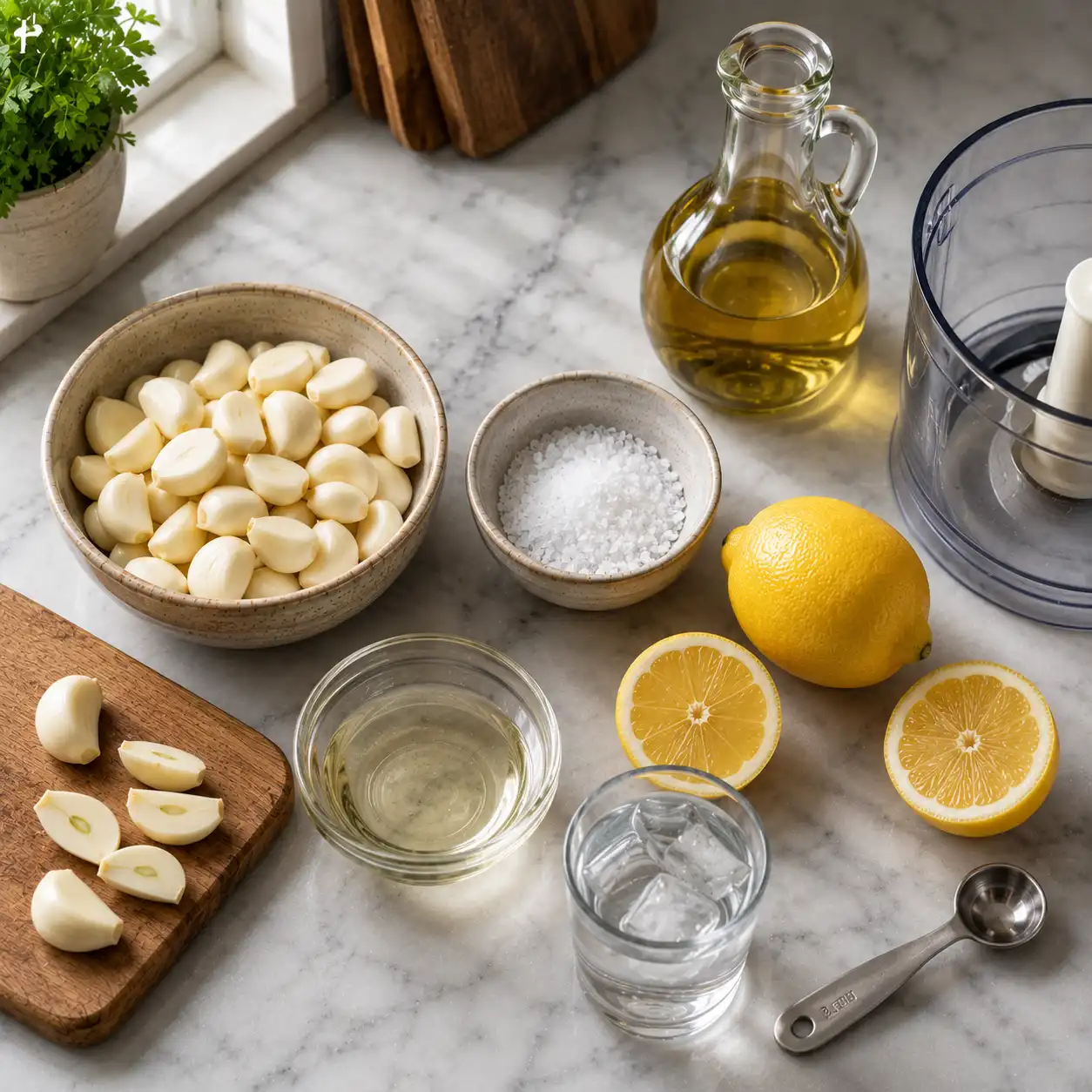
- 1 cup fresh garlic cloves, peeled and halved
- 2 teaspoons kosher salt
- 4 cups neutral oil (such as vegetable, canola, or grape seed)
- 1/2 cup fresh lemon juice
- 2 teaspoons ice water
Instructions
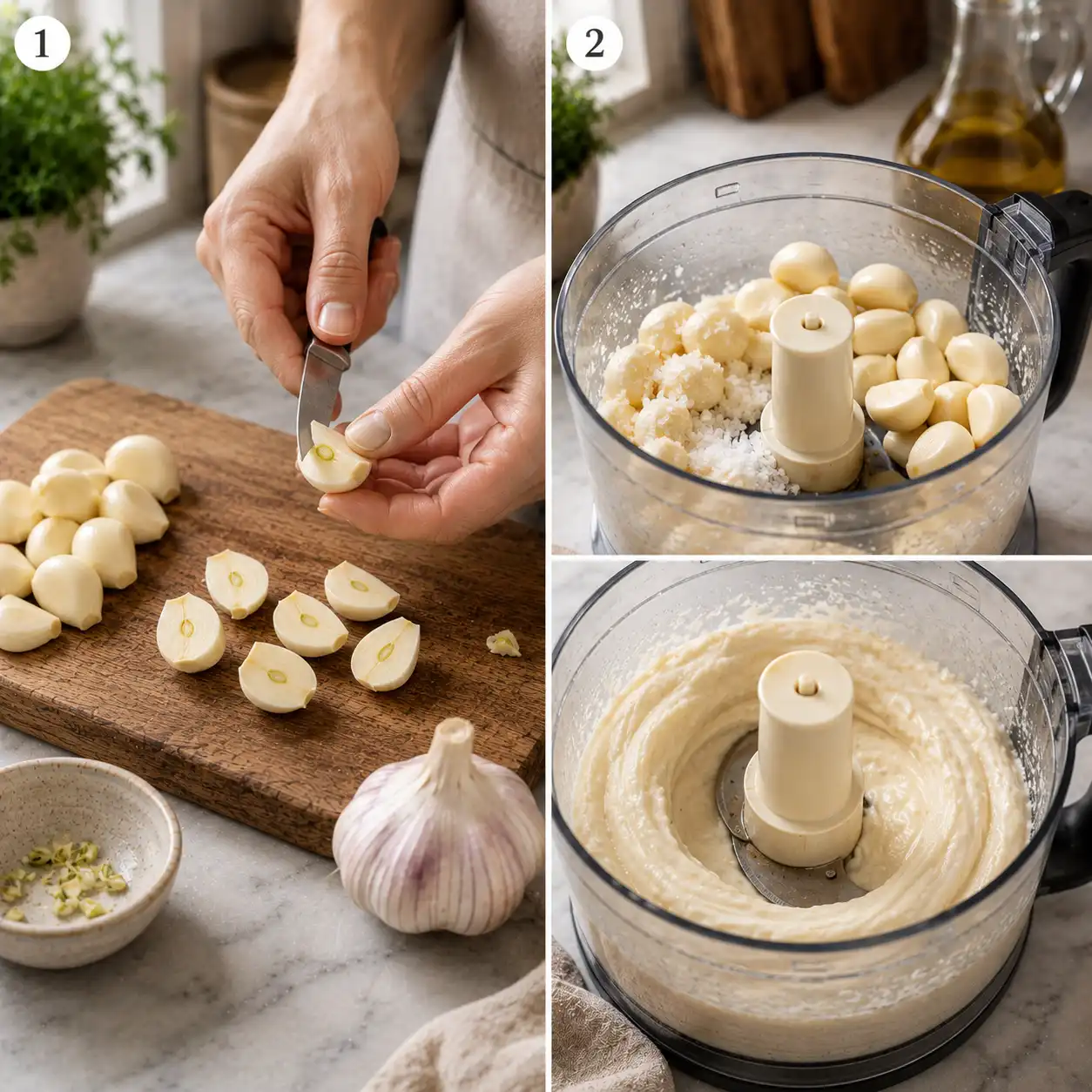
- Step 1: Prep Garlic – Peel the garlic cloves and slice them in half to remove any green sprouts from the center to ensure a mellow flavor.
- Step 2: Create Paste – Place the garlic and salt in a food processor and pulse repeatedly until the garlic is finely minced and forms a paste.
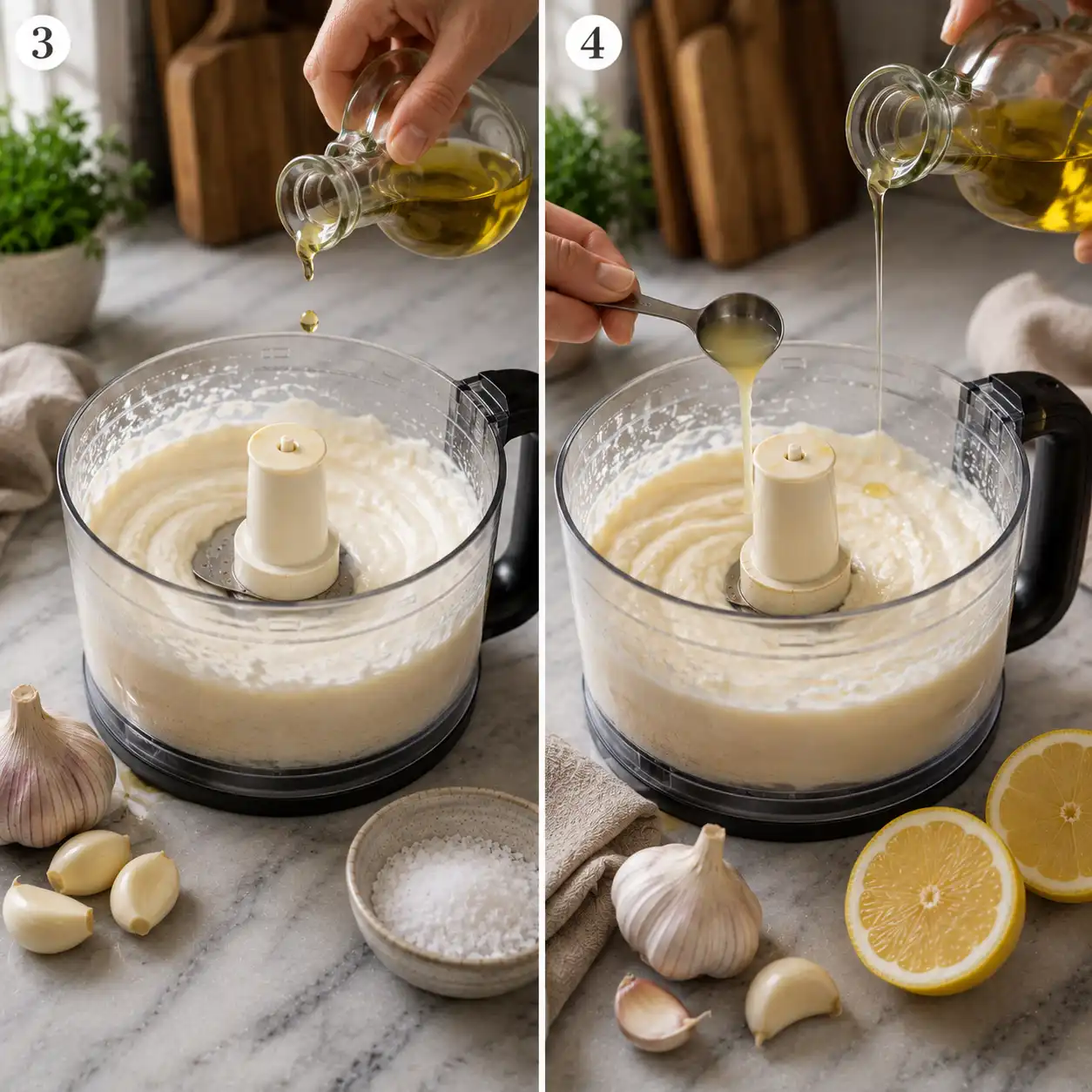
- Step 3: Begin Emulsion – While the processor is running, slowly drizzle in 1/2 cup of oil in a very thin, steady stream.
- Step 4: Add Acid – Once the first 1/2 cup of oil is incorporated, add 2 teaspoons of lemon juice and process until combined.
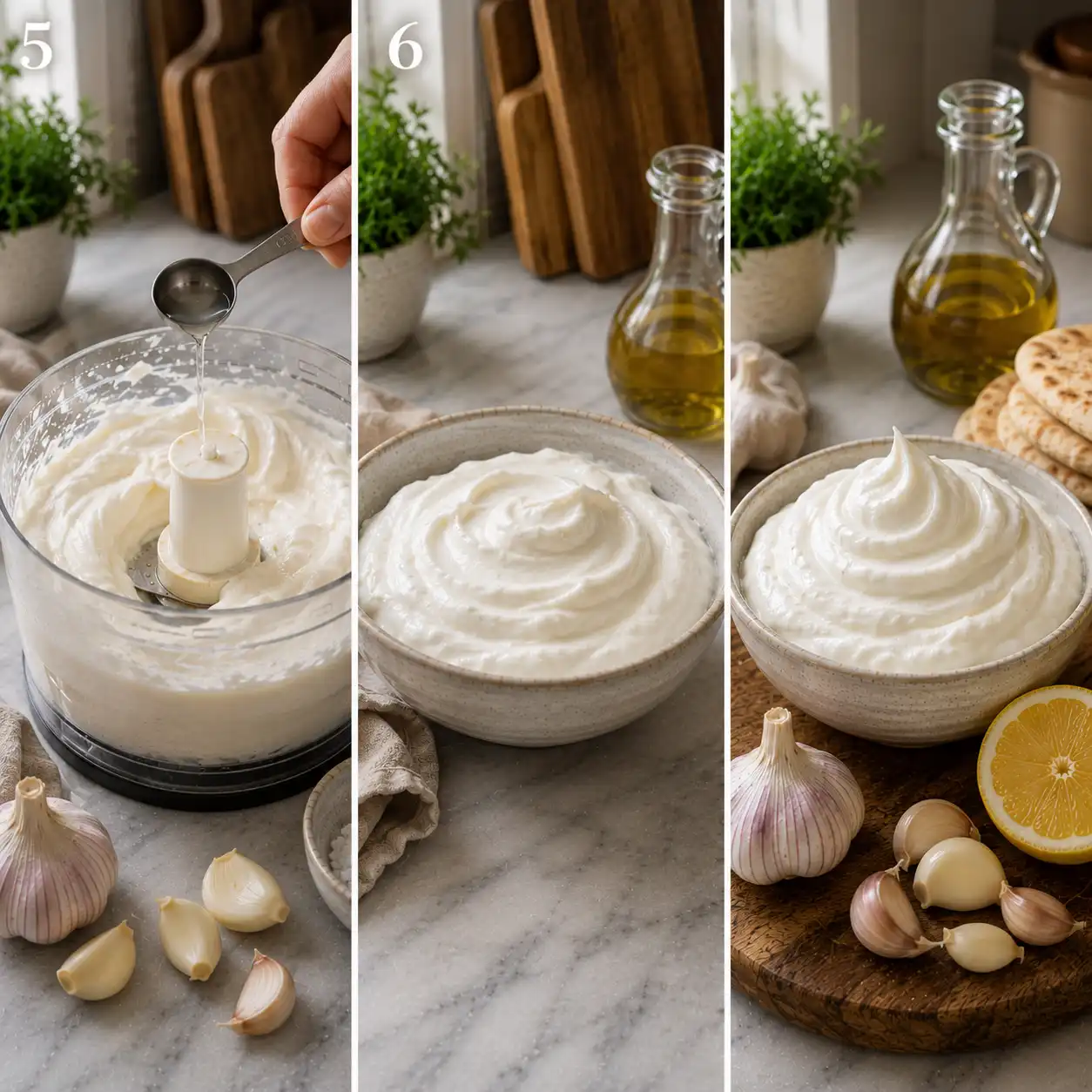
- Step 5: Build Volume – Continue slowly adding oil in a thin stream, alternating every 1/2 cup of oil with a teaspoon of lemon juice.
- Step 6: Maintain Temperature – If the food processor bowl feels warm, add 1 teaspoon of ice water to stabilize the emulsion and keep it cool.
- Step 7: Final Blend – Continue the alternating process until all ingredients are used and the sauce reaches a stiff, meringue-like consistency.
- Step 8: Store Properly – Transfer the toum to a glass container and refrigerate; let the flavors mellow for 24 hours before serving.
Notes
Ensure all ingredients are at room temperature or slightly chilled; avoid using olive oil as it can make the sauce bitter.
- Prep Time: 20 minutes
- Cook Time: 1 minute
- Category: Condiment
- Method: Emulsification
- Cuisine: Lebanese
- Diet: Vegan
Nutrition
- Serving Size: 1 tablespoon
- Calories: 95 kcal
- Sugar: 0.1g
- Sodium: 55mg
- Fat: 10.5g
- Saturated Fat: 1.2g
- Unsaturated Fat: 9.1g
- Trans Fat: 0.01g
- Carbohydrates: 0.8g
- Fiber: 0.1g
- Protein: 0.2g
- Cholesterol: 0.01mg
Keywords: Toum, Garlic Sauce, Lebanese Cuisine, Vegan, Middle Eastern, Garlic Spread
The Science Behind the Perfect Emulsion
How Garlic Acts as a Binder
Many home cooks wonder how three or four liquid or semi-solid ingredients can turn into a thick, spreadable foam without eggs. The answer lies in the cellular structure of garlic. Garlic contains natural emulsifiers specifically proteins and complex carbohydrates that help stabilize the mixture of water (from the lemon juice and garlic itself) and oil. When you crush garlic cloves into a fine paste, you release these stabilizing agents. By adding oil in a very thin stream while the blades of a food processor are spinning, you break the oil into microscopic droplets. The garlic proteins then coat these droplets, preventing them from merging back together. This creates the stable structure we recognize as a fluffy sauce.
Temperature and Stability
Temperature plays a vital role in the success of your emulsion. If the ingredients or the food processor bowl become too warm, the emulsion is likely to break, resulting in a greasy, separated mess. Many experts suggest using chilled oil or even adding a teaspoon of ice water during the blending process to keep the mixture cool. Cold temperatures help the oil maintain a higher viscosity, which makes it easier for the garlic paste to trap the oil droplets. For those who want to understand more about the chemical interactions in food, you can read about the chemistry of traditional emulsions which explains why certain fats and acids react the way they do under mechanical shear.
Essential Ingredients for Success
Selecting the Right Garlic
Since garlic is the star of the show, its quality is paramount. You should look for fresh, firm heads of garlic with tight, white skins. Avoid any bulbs that have started to sprout or have soft spots. The green “germ” inside older garlic cloves can introduce a bitter, overly harsh flavor that persists even after emulsification. Many professional chefs take the time to slice each clove in half and remove the green sprout to keep the flavor clean and sweet. The age of the garlic also affects its ability to emulsify; very old garlic may have lost some of its natural moisture and protein strength, making it harder to achieve that fluffy result.
Choosing a Neutral Oil
The choice of oil determines the final flavor and stability of your toum. You must use a neutral-flavored oil with a high smoke point. Grapeseed oil, sunflower oil, or safflower oil are excellent choices because they do not have a strong taste that competes with the garlic. Avoid using extra virgin olive oil for the primary emulsion. Olive oil contains polyphenols that can turn extremely bitter when agitated at high speeds in a food processor. Additionally, olive oil is quite heavy and can prevent the sauce from reaching its maximum fluffiness. If you want a hint of olive flavor, you can stir in a small amount by hand after the sauce has already formed its structure.
| Ingredient | Role in Toum | Best Variety |
|---|---|---|
| Garlic | Emulsifier and Primary Flavor | Fresh, firm white garlic (no sprouts) |
| Oil | Provides Body and Texture | Grapeseed or Sunflower Oil |
| Lemon Juice | Acidity and Stabilization | Freshly squeezed lemon |
| Salt | Flavor Enhancer and Abrasive | Kosher salt or fine sea salt |
| Ice Water | Temperature Control (Optional) | Filtered ice-cold water |
Step-by-Step Instructions to Make Toum
Creating this sauce requires following a specific sequence to prevent the oil from separating. If you rush the process, you will end up with a liquid rather than a cream. Follow these steps carefully for the best results.
- Step 1: Prep the Garlic – Peel approximately one cup of fresh garlic cloves. Slice them in half and remove any green germs from the center. Place the garlic and a teaspoon of salt into the bowl of a food processor.
- Step 2: Create the Paste – Pulse the garlic and salt until they are finely minced. Scrape down the sides of the bowl. Continue processing until the garlic turns into a smooth, completely uniform paste. This step is vital because any chunks will prevent a stable emulsion from forming.
- Step 3: The Slow Drizzle – Turn the food processor on and begin adding your oil one drop at a time. After you have added about half a cup of oil slowly, you will notice the mixture start to thicken and turn white.
- Step 4: Alternate Liquids – Once the emulsion has started, you can increase the oil flow to a very thin, steady stream. Alternate every half cup of oil with a teaspoon of lemon juice. This helps maintain the balance of the sauce and keeps the mixture from getting too thick to process.
- Step 5: Final Whipping – Continue this process until all the oil and lemon juice are incorporated. The sauce should be bright white and very fluffy. If it looks too heavy, add a teaspoon of ice water at the very end and pulse to lighten the texture.
Culinary Applications and Pairings
The Perfect Companion for Poultry
The most iconic pairing for this garlic sauce is charcoal-grilled chicken. Whether it is a whole rotisserie bird or skewers of shish taouk, the creamy garlic cuts through the smoky charred flavor of the meat beautifully. If you are looking for a quick and healthy way to enjoy this at home, consider serving it alongside an air fryer lemon pepper chicken breast. The lemon notes in the chicken harmonize with the acidity in the toum, creating a bright and satisfying meal. You can also use the sauce as a marinade before grilling, as the oil and garlic help tenderize the meat and create a flavorful crust.
Spreads and Dips for Flatbreads
Toum is traditionally served with warm pita bread, but it works exceptionally well with other types of flatbreads. For those following a low-carb lifestyle, try spreading a generous layer of this garlic cream onto a keto naan bread recipe. The richness of the garlic sauce complements the soft texture of the naan, providing a high-flavor snack or side dish without the extra carbohydrates. It also serves as a fantastic base for wraps, acting as a moisture barrier that keeps the bread from getting soggy while adding a punch of flavor to every bite.
Integrating Toum into Main Courses
Beyond being a side dip, toum can be used to add depth to various cooked dishes. It works well when stirred into stir-fries or roasted vegetable medleys. For instance, you can use a dollop of the sauce to finish a dish of beef and broccoli, giving the sauce a rich, garlicky undertone that binds the ingredients together. Its high oil content means it can also be used to sauté vegetables, providing both the fat and the seasoning in one step. This makes it an excellent tool for simplifying your cooking process during busy weeknights.
A Solution for Sheet Pan Dinners
If you prefer low-effort cooking, this sauce is a game-changer for oven-based meals. It is a perfect addition to healthy family dinners sheet pan recipes where you can roast potatoes, cauliflower, and chicken together. Simply dollop the garlic sauce over the hot ingredients right before serving. The heat from the food slightly melts the toum, turning it into a rich glaze that coats the vegetables and meat. Because it is so concentrated, a small amount goes a long way in providing flavor for the entire family.
Troubleshooting Common Issues
Fixing a Broken Sauce
The most common problem when making toum is the emulsion breaking, which leaves you with a bowl of garlic bits swimming in oil. This usually happens because the oil was added too quickly or the mixture got too hot. Do not throw it away! You can often fix a broken sauce by removing the mixture from the food processor, cleaning the bowl, and starting over with one fresh egg white (if you don’t mind it not being vegan) or a small amount of fresh garlic paste. Slowly drizzle the broken mixture back into the new base as if it were fresh oil. This usually restores the fluffy structure.
Managing Intense Bitterness
Raw garlic can sometimes be overwhelmingly bitter or “hot” on the tongue. If your finished sauce is too pungent, there are a few ways to mellow it. First, allow the sauce to sit in the refrigerator for 24 hours; the flavors will naturally soften over time. Second, check the garlic you used; next time, ensure you remove the green germ. If the sauce is already made and too bitter, you can try whisking in a small amount of Greek yogurt or mayo to dilute the intensity, though this will change the traditional vegan nature of the recipe.
Health Benefits of Garlic
While toum is enjoyed primarily for its incredible taste, the main ingredient offers numerous health advantages. Garlic is rich in allicin, a compound known for its potent medicinal properties. Studies have shown that regular garlic consumption can help support the immune system and may contribute to heart health by helping to manage blood pressure. To learn more about the scientific backing of these claims, you can look at the documented health benefits of garlic. Since toum uses raw garlic, many of these beneficial compounds remain intact, making it a functional food as well as a delicious one.
FAQs
How long does homemade toum last?
When stored in an airtight container in the back of the refrigerator, homemade toum can last for up to 3 to 4 weeks. Because it contains a high amount of oil and acid, it is quite resistant to spoilage. However, always use a clean spoon to scoop it out to prevent cross-contamination.
Can I freeze garlic sauce?
Freezing is not recommended for toum. The delicate emulsion of oil and garlic particles tends to break once it is thawed, resulting in a separated, grainy texture. It is best enjoyed fresh or kept in the refrigerator.
Why is my toum liquid and not fluffy?
This usually happens if the garlic wasn’t processed into a fine enough paste before adding the oil, or if the oil was added too quickly. It can also happen if the ratio of oil to garlic is off. Make sure you use enough garlic to provide the necessary proteins for the emulsion to hold.
Can I use a blender instead of a food processor?
A blender can work, but it is often more difficult because the blades are smaller and the jar is narrower. A food processor is the preferred tool because it allows for better aeration and provides more space for the emulsion to grow in volume.
Conclusion
Mastering the creation of toum is a rewarding skill for any home cook who loves bold, Mediterranean flavors. By respecting the science of emulsification and choosing high-quality ingredients, you can produce a garlic sauce that is light, airy, and incredibly pungent. Whether you use it as a dip for grilled meats or a spread for fresh flatbreads, this Lebanese classic is sure to become a staple in your kitchen. Remember to take your time with the oil, keep your ingredients cool, and enjoy the process of making this culinary masterpiece from scratch.